Welcome! This is where i share my thoughts on fiddling, music education and musicianship. Feel free to share yours by sending me a message or leaving a comment. Enjoy your visit.

Am I really too old to start playing music?
The idea that people should start to play an instrument at a tender age if they want to stand a chance in music, is a by-product of the musical rat race. Only a competitive environment will actually care about how young you were when you started, or how many hours...

A few thoughts on the concept of talent
In 1869 Sir Francis Galton introduced the term 'nature versus nurture' in his book 'Hereditary Genius'. He suggested that the boundaries of human achievement were determined by nature, essentially implying that how good people can be at anything depends on their...
Self-learning and music: It’s all up to you
Self-learning in music is a highly ignored and underestimated concept. Formal music learning is a privilege. This is firstly because a lot of people are not capable of funding their music tuition. Secondly, people very often tend to be interested in musical styles and...
Old-time fiddling: Playing the ‘wrong’ way
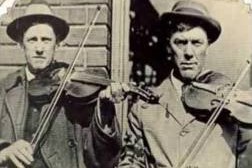
I feel that my involvement in old-time fiddling has proven extremely beneficial for both my playing and sense of musicianship in general. In order to justify this assertion, I would like to examine a few aspects of old-time fiddling and make a few short comments....
Old-Time fiddling: Bow grips and bowing mentality
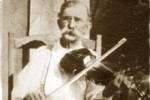
I believe the most interesting and striking element of old time fiddling is bowing. It is in this aspect of fiddle playing that the diversity, richness, and playful spirit of the tradition are compressed into. Bowing was the first thing that caught my attention the...
Old-time fiddling: The means being the ends
A very interesting principle I have found hidden in the way old-time fiddlers approach music is the absence of a rigid separation between practice and playing. For many old-time fiddlers the actual playing experience is the key element in their learning. In my...
3 ways to better jazz improvisations
Studying and decoding jazz harmony is part and parcel of our efforts to produce meaningful improvisations. However, being solely concerned and obsessed with the harmonic validity of our notes is a trap to be avoided. Miles Davis said that good playing is 80% attitude...
Δυο λόγια για την τζαζ αρμονία και τον αυτοσχεδιασμό
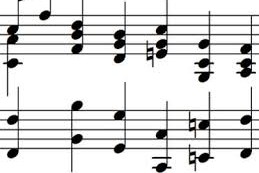
Θα ήθελα να μοιραστώ κάποιες γενικές σκέψεις πάνω στην αρμονία και κατ’ επέκταση τον αυτοσχεδιασμό. Εχω κάνει πολλές και ωραίες συζητήσεις με πολύ κόσμο οπότε σκέφτηκα να γράψω δυο αράδες για το ιστορικό και μουσικό πλαίσιο στο οποίο κινούμαστε ελπίζοντας ότι μπορούν...

We are our repertoire. The case for building a solid repertoire
Isn't this what musicians are supposed to do? Well, yes. However, i remember myself in the past being asked to play something on the spot on numerous occasions and i must say i could not respond in an effortless and convincing way. I felt weird when everyone took it...

Busking is great
There is nothing more fun than playing music in a beautiful street corner with a few people around you enjoying themselves. There is actually no strong busking culture in Greece but good weather and the relaxed summer atmosphere -especially in tourist destinations-...

How people learn and what it means for us musicians
During my classical training years I used to hear teachers around me claiming that for every day I don’t practice I stay 2 days behind. These teachers even went so far to specify the exact number of hours I had to practice if I really wanted to stand a chance in...
How to use the Diminished sound to simplify Jazz Harmony
All of us interested in improvising in the jazz idiom need mental tools of simplifying jazz harmony. The concept I would like to discuss in this article, which I think can help in understanding harmony and chord substitutions, is that of the three diminished...
The major pentatonic scale: Tips on how to use it
This session is a short introduction to the major pentatonic scale. This scale is widely used by musicians all over the world, so it deserves our attention early in our sessions. Pentatonic scales are made of 5 different notes and are extremely useful and interesting....
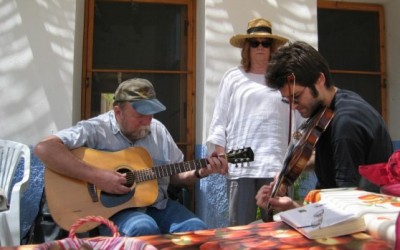
Techniques, not Technique!
Trying to become a better musician is like walking up a beautiful mountain. The higher we get the nicer the view is. We know that the view is already worth all our efforts and patience and we can imagine that higher up the view is even greater. Along this path of...

Jazz solo appreciation: The importance of context
Notes are nothing on their own. They have no identity, no meaning. They cannot even be in tune on their own, as in order for a note to be in tune it has to be in reference to something else. Concert pitch A at 440Hz is the established reference frequency for tuning....
Tips on how to approach musical improvisation
I would like to offer a few tips on how to approach musical improvisation. They will hopefully point you in the direction of simplifying your approach in improvisation and encourage your musical freedom. Good improvisers are not smarter than everybody else. And they...

The Bluegrass scene in Greece
The story of bluegrass music in Greece is basically the story of the Train45 Bluegrass Band. Back in 1996 I was fortunate to meet Yiannis Gougourelas, a great bluegrass guitarist who has been my guitar buddy for all these years in...
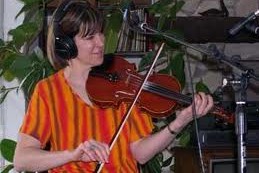
Great fiddler and teacher Kate Lissauer
Kate Lissauer is an excellent fiddler, clawhammer banjo picker, guitarist and singer. A champion fiddler in her home state of Maryland, she is highly respected for her work in the American folk idioms. She currently performs with Buffalo Gals, a UK-based band, which...

An interview with Prof. Frank Millward on improvisation
I met Frank Millward in 2003 in London. Frank is a Multimedia Artist, Composer and jazz performer. He is a Professor in the School of Fine Art at Kingston University, London. Over the years he has taught Music Composition, Jazz Theory, Improvisation, Jazz History and...
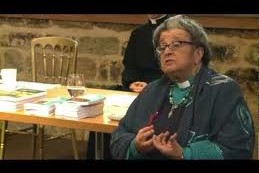
An interview with Prof. June Tillman on improvisation
While I was in England I was fortunate to meet June Boyce-Tillman, a great teacher and a wonderful personality. June is a Professor of Applied Music at the University of Winchester. Her doctorate on the development of children's musical creativity was widely published...

Purism in Jazz: Purism as the end of jazz history
Purism in jazz represents the idea of returning to the aesthetic, harmonic and melodic principles of the jazz period that starts with Ellington, Armstrong and ends with the emergence of free jazz in the late 1950s or early 1960s. This suggests the marking of this...

Christopher Small is no longer with us
Christopher Small, a wonderful personality and writer, passed away on September 7th 2011. He was the author of three books, Music, Society and Education, Music of the Common Tongue and Musicking. I had the honour of translating his book Musicking into Greek with...
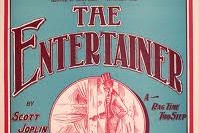
Ragtime and the banjo: Scott Joplin’s ‘The Entertainer’ as played by Jimmie Arnold on his ‘Rainbow ride’ album
Jimmie Arnold was one of my favourite banjo players and Scott Joplin was undoubtedly the most important of the composers who defined the ragtime idiom, which was popularized in the 1890s and 1910s. This recording is indicative of the fact that ragtime thrived on the...
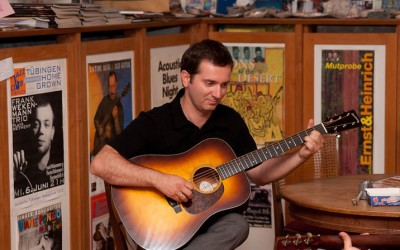
My good friend and great guitarist Yiannis Gougourelas
When I started playing bluegrass banjo in my teens I always thought that I would never have the chance to have a bluegrass guitarist around to play with in Greece. Not only did I find one but he was so good I could not believe it. Luck had offered me more than I could...
Μουσικοτροπώντας με τον Κρίστοφερ Σμωλ (Εισαγωγή)
Δημοσιεύω την εισαγωγή του βιβλίου 'Musicking' του Christopher Small το οποίο μετέφρασα στα Ελληνικά με τη Δήμητρα Παπασταύρου (Μουσικοτροπώντας-Εκδόσεις Ιανός). Το βιβλίο αυτό μου κέντρισε το ενδιαφέρον από το πρώτο ξεφύλλισμα. Σύντομα μού δημιουργήθηκε η επιθυμία να...
Μουσικοτροπώντας με τον Κρίστοφερ Σμωλ (Κεφάλαιο 1)
Στο πρώτο κεφάλαιο του 'Musicking' ο Christopher Small γράφει για το Συναυλιακό Μέγαρο και τη φύση των κοινωνικών γεγονότων που γίνονται σε αυτό. Στην Ελλάδα αν και η έννοια του 'Μεγάρου' δεν έχει παρά λίγα χρόνια που ενηλικιώθηκε έχει ωστόσο καταφέρει να συμβολίζει...

Συνεντευξη με τον Παναγιώτη Κανελλόπουλο για τον αυτοσχεδιασμό και τη μουσική παιδαγωγική
Ο Π. Κανελλόπουλος ειδικεύθηκε στη μουσικοπαιδαγωγική έρευνα στο Πανεπιστήμιο του Reading. Διδάσκει Μουσική Παιδαγωγική στο Πανεπιστήμιο Θεσσαλίας με έμφαση στον αυτοσχεδιασμό και τη σύνθεση. Ερευνά τον αυτοσχεδιασμό ως άσκηση ελευθερίας και παίζει μουσική με μικρούς...
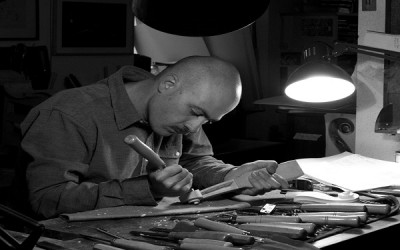
Ο φίλος, κατασκευαστής και επιδιορθωτής βιολιών Γιάννης Αποστόλου
Όσοι παίζουν βιολί γνωρίζουν πόσο σημαντικό είναι να έχεις έναν άνθρωπο δίπλα σου που να τον εμπιστεύσαι και να τον εκτιμάς για ο'τι έχει να κάνει με το set up και την επισκευή του οργάνου σου. Το setup και η ανάδειξη των μέγιστων δυνατοτήτων ενός βιολιού είναι μια...
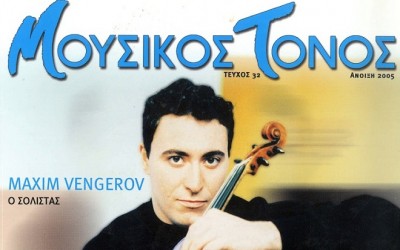
Maxim Vengerov: ‘Παιδί θαύμα’ ή ‘παιδί τραύμα’?
Το περιοδικό Μουσικός Τόνος του Ωδείου Φιλιππος Νάκας, τεύχος 32 (Ανοιξη 2005), φιλοξενεί μία συνέντευξη του διεθνούς φήμης βιολονίστα Maxim Vengerov από τη Δέσποινα Νάκα. Σε αυτήν τη συνέντευξη συμπυκνώνεται όλο το αξιακό υπόβαθρο της κυρίαρχης αντίληψης για τη...